
Trace Former Morgan County Owners
Tracing who owned a piece of land before you is real detective work. Morgan County property records hold the answer. The answer sits in recorded deeds rather than a single tax card. Start with the newest grantee and walk backward, grantor by grantor. Make sure the land description stays the same throughout. You can search Morgan County property records by address or by name to get going. The County Clerk's online index states no starting year. So older transfers may live in Archives books and microfilm. A careful chain keeps a name match apart from a true conveyance of the parcel.
| Source | Years It Covers | Where Held | What It Shows |
|---|---|---|---|
| Clerk scanned-records link | Beginning year not stated | Morgan County Clerk | Modern recorded instruments; search details unverified |
| Deeds and deed index | 1820-1905; index 1820-1969 | West Virginia Archives microfilm | Historic parties and book references |
| Surveys and plats | Surveys 1821-1869; plats 1865-1877 | West Virginia Archives | Older boundary and lot context |
| Land-entry book | 1812-1853 | West Virginia Archives | Early land-entry history |
For a recent transfer, begin with the Clerk's current instrument and its book/page reference. For a turn-of-the-century chain, search the Archives deed index before touching the microfilm. A description citing a lot, tract, survey, or part parcel deserves a look at the plat or survey record too. Morgan County was formed in 1820 from parts of Hampshire and Berkeley counties. That predecessor-county context can matter for the earliest land history. Era by era, the sources shift.
Morgan County Online Index Coverage
The Morgan County Clerk links to a legacy scanned-records system. The county also posts a 2017 use agreement, yet the page names neither the portal's oldest indexed year nor its imaging cutoff. Do not write an assumed year into a chain. Ask the Clerk directly whether a given book or date is online. Then lean on the State Archives' published date ranges to plan the older search.
The Clerk's page also posts a July 2024 fee schedule. A web index is only a finding aid. The full instrument must come from the proper record holder. A title opinion must come from a title professional. If a name search fails, vary initials and spelling as a lead only. Then compare the parcel description and book/page. A missing online result never proves a deed was lost.
The Morgan County Clerk page is the official route. It covers the scanned system and the recording counter.
The legacy scanned-records landing page hosts the system itself. Its availability and date coverage are not guaranteed.
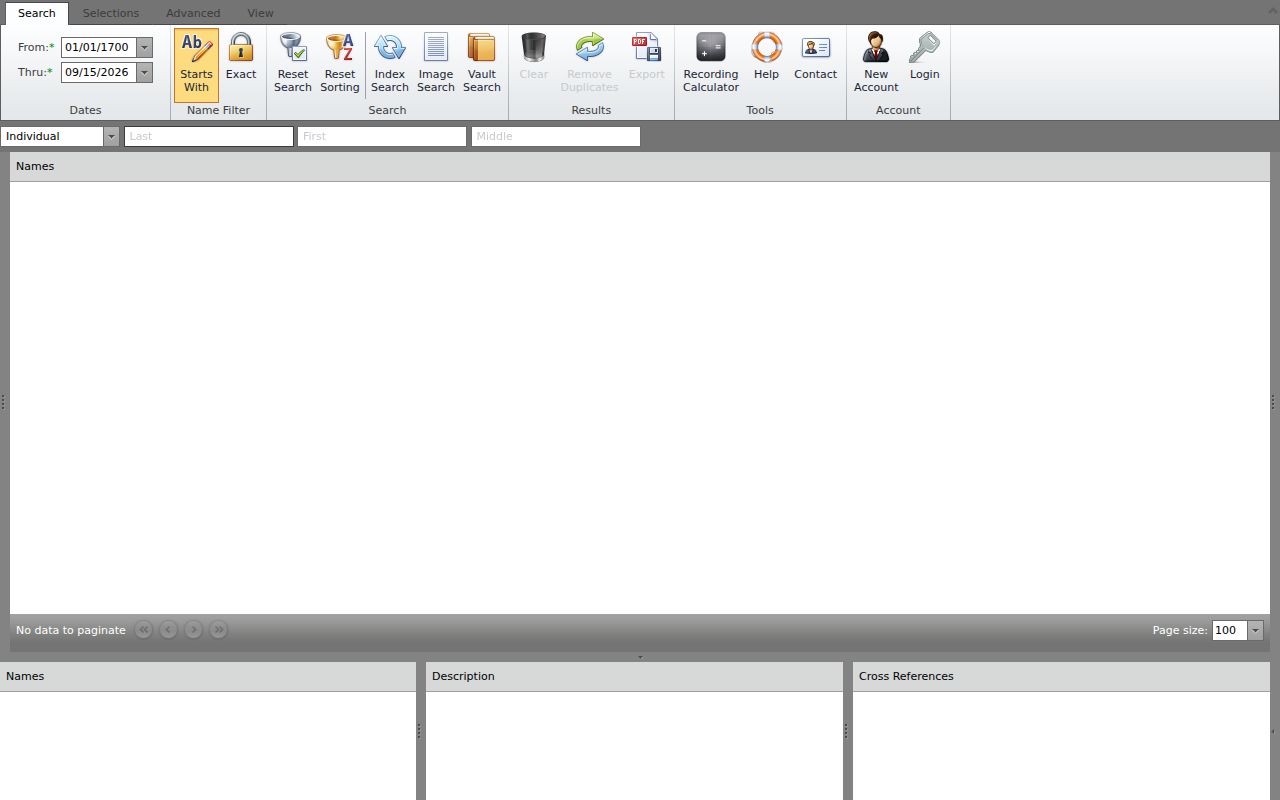
The captured landing page marks the online lead; the published coverage year remains unstated.
Morgan County Chain Before Digitization
The Archives' Morgan holdings suit a long ownership chain unusually well. Deed volumes span 1820 to 1905, and the deed index runs through 1969. The county record book covers 1818-1839, surveys run 1821-1869, plats 1865-1877, and the land-entry book spans 1812-1853. These are distinct series, each answering a different question. The index locates a deed. The deed supplies the legal wording. The survey or plat may explain how the parcel was laid out.
Move backward by era using those date ranges instead of lumping everything into "old records." Record the exact volume, page, name forms, and property description as you go. A historical index entry may lack the full instrument, and legal descriptions shift as larger tracts are divided. Connect prior owners through the land itself, not just repeated surnames.
The State Archives microfilm guide identifies Morgan County's deed, index, survey, plat, and land-entry runs.
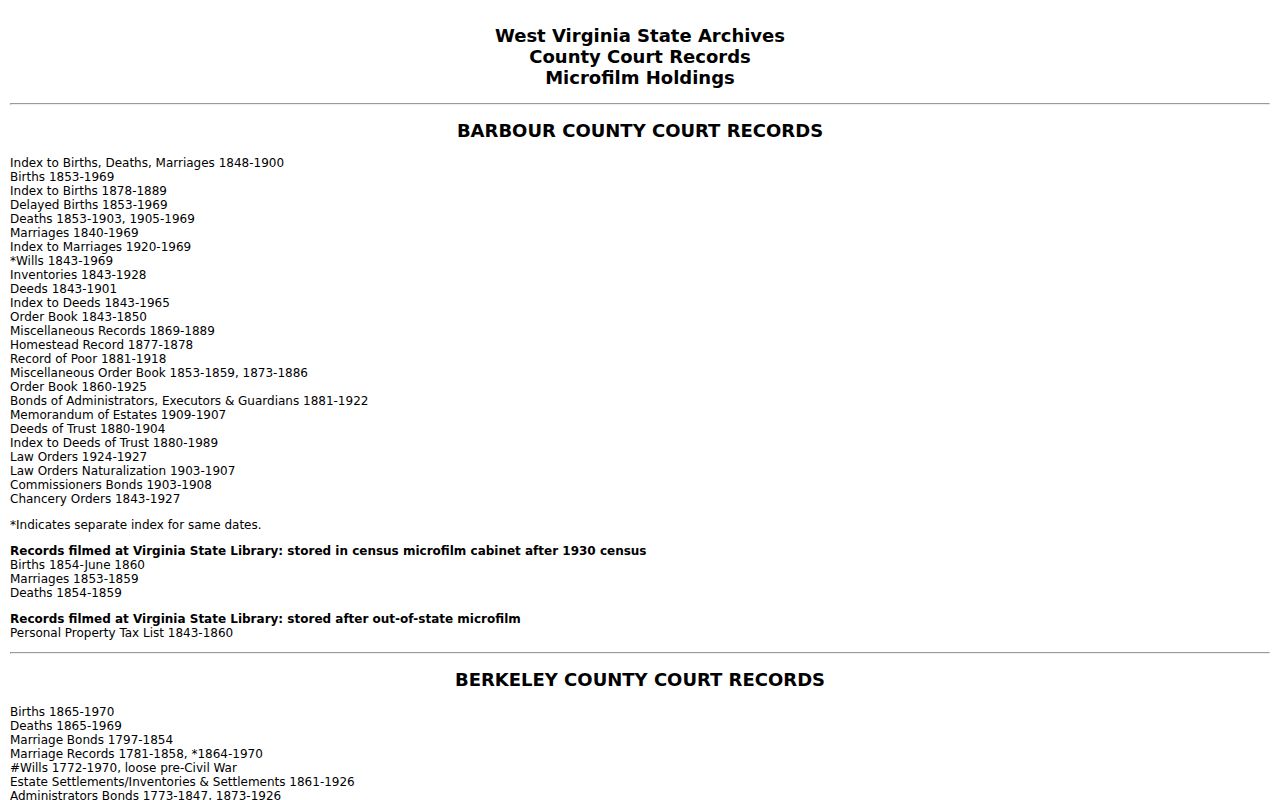
The image lists the dated record groups that carry a Morgan County chain past any modern online search.
Walk the Morgan County Chain Back
Every Morgan County deed gives its parties a direction. The grantor conveys, and the grantee receives. A chain of title is that sequence of transfers for one piece of land. Grab a deed book/page or legal-description clue from the Assessor to find the current instrument. Then step from grantee to prior grantor. Confirm each new description still covers the same property. Names get abbreviated, misspelled, or reused. That is why the parcel wording matters most.
- Locate the newest deed and write down its grantee, grantor, date, and legal description.
- Search the grantor as an earlier grantee and find that party's acquisition instrument.
- Compare acreage, tract language, exceptions, easements, and deed references at each link.
- When the online run ends, shift to the Archives index and deed books for that era.
- Grantor
- The party conveying the recorded interest.
- Grantee
- The party receiving the recorded interest.
- Chain of title
- The ordered history of conveyances and related land filings.
- Legal description
- Land wording that can remain useful when street names change.
Probate Links in Morgan County History
A former owner does not always leave land by sale deed. A will, survivorship, or intestate succession can do it instead. Morgan County Probate notes that jointly held property with survivorship passes to the co-owner outside the will. Other real estate may pass under a will that itself serves as the deed, or to heirs under the law in effect at the date of death. An executor may sell only when the will grants a power of sale. A dispute can require a Circuit Court petition.
For estates opened after July 13, 2001, the county lists a probate appointment plus materials such as the original will, death certificate, heir addresses, and bond information. The personal representative files an inventory within 90 days. Read these papers alongside the later Clerk instrument. An estate file can explain why the chain changes names or holds a gap that an owner-only search cannot resolve.
Morgan County Probate instructions describe the estate and real-estate transfer process.
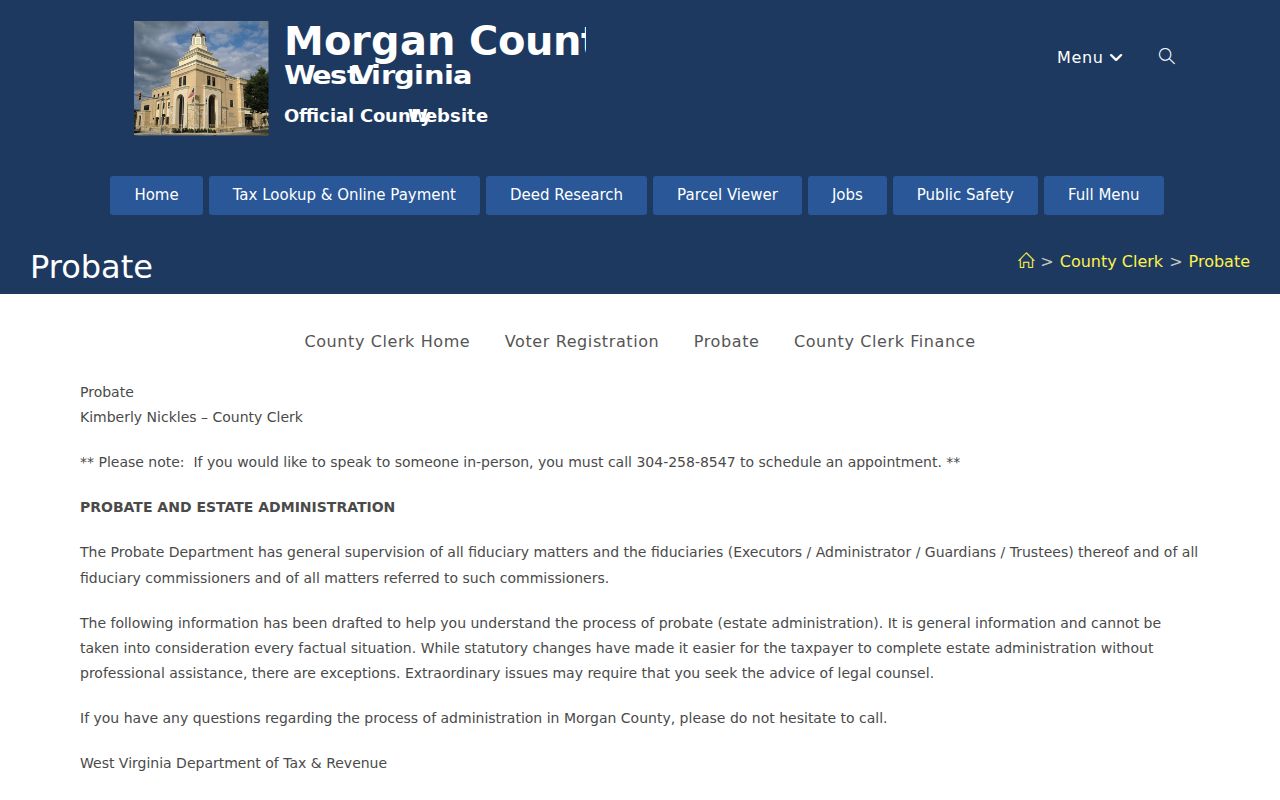
Probate records can explain a transfer where the earlier owner never sold the parcel. They turn a dead end into a documented one.
West Virginia Vital Registration's certificate request forms offer a separate route when an estate file calls for a death record, with stated identity and relationship requirements.
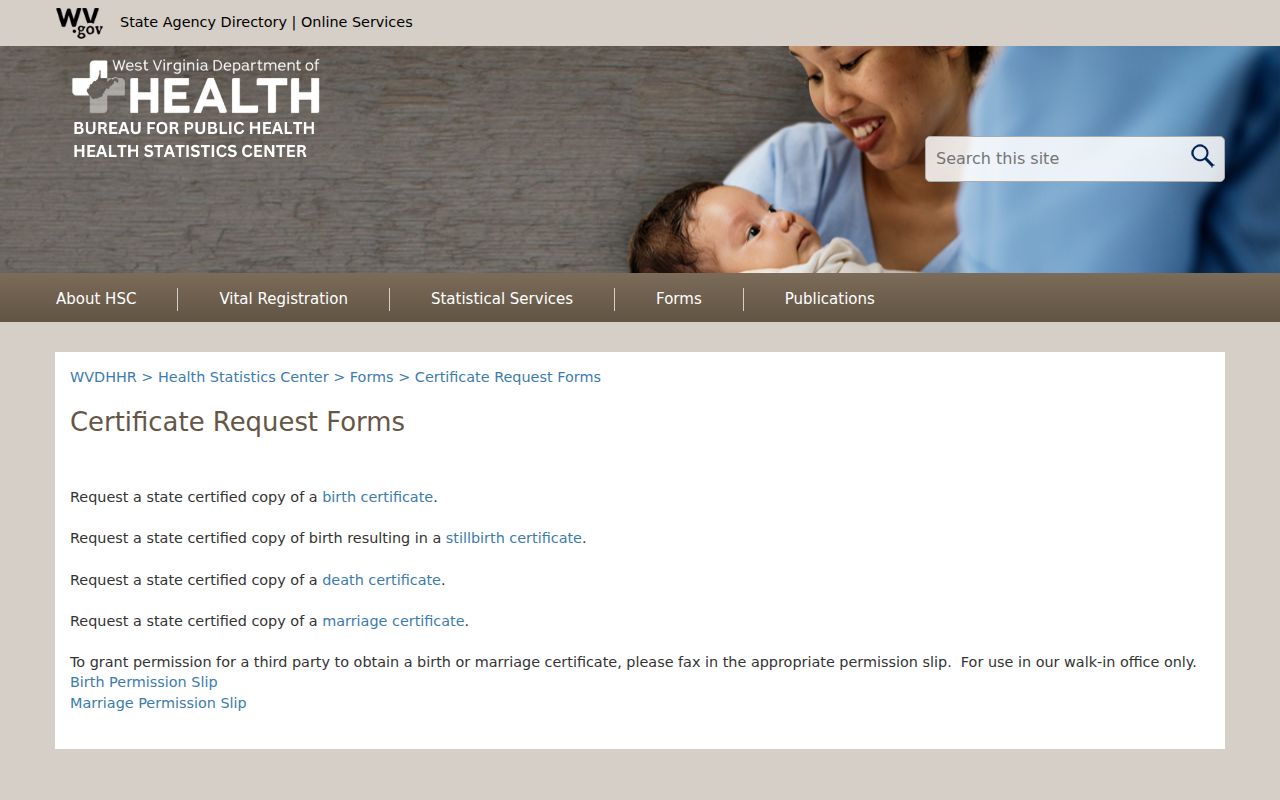
A birth or death record can back up an estate filing, yet it proves nothing about who inherited a particular tract. Land passes through probate and the County Clerk, so trace the transfer there before drawing conclusions.
Morgan County's 2006 Record Rescue
Fire struck the Morgan County courthouse on August 8, 2006. County history credits volunteers with rescuing the vault's contents, land records included. State Archives reporting adds that records stored in the jail moved to Archives afterward. The fire matters to any record search. It does not mean every deed burned, though. Nor does it fix 2006 as the start of online coverage.
Work record by record instead. A courthouse event can shift where an old book sits. Custody and date coverage must still be confirmed for the specific volume you need. The Morgan County Historical and Genealogical Society published a 261-page county history catalog. Use it for context. For a conveyance itself, the deed and its index remain the route. The Morgan County history catalog record describes that genealogy volume.
The local-history volume can add context around names found in Morgan County deed records.
Before Morgan County's 1820 Deed Run
Morgan County was formed in 1820 from parts of Hampshire and Berkeley counties. The Archives holds a land-entry series covering 1812 to 1853 and a county record book spanning 1818 to 1839. Its Morgan deed volumes begin in 1820. What if your chain reaches earlier? Record the jurisdiction named in the source. Consult that predecessor county's material rather than expecting a Morgan deed entry for every event.
Treat the land-entry book, the deed index, and the deed volumes as separate collections. A date overlap does not make their records interchangeable. Follow the parcel's legal description and the parties named in each document. Then note which county held jurisdiction at the time. The State Archives Morgan County finding aid lays out the documented record ranges. Use those ranges when planning an older search.
How Far Morgan County Owners Can Be Traced
The Archives deed run for Morgan County begins in 1820, close to the county's founding. The online Clerk index has no published start year. The land-entry book reaches back to 1812, before Morgan County existed. That earlier material can supply context a later deed alone cannot. Each collection does a different job. The owner-of-record chain is only as complete as the documents and legal descriptions found for that parcel.
Research limit. The Clerk's public text does not state an online cutoff year. For older Morgan County owners, use the Archives date ranges and check each record group instead of assuming the web index is complete.